Shared Hosting vs. Cloud Hosting: Which Is Right for Your Small Business in 2026?
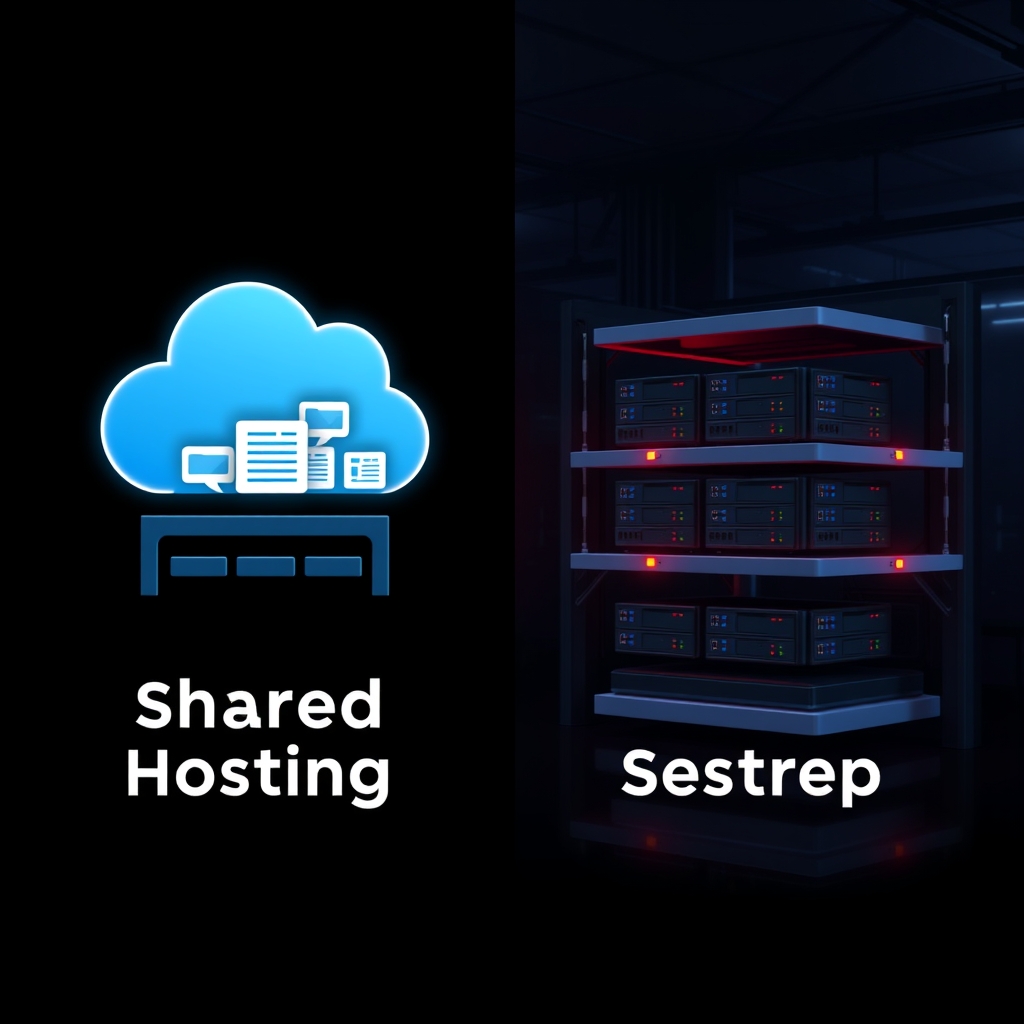
Your Small Business Deserves the Right Foundation
Let's cut through the noise. You're running a small business in 2026. Every dollar counts. Every second of downtime could cost you a customer. The choice between shared hosting and cloud hosting isn't just technical—it's strategic.
We've helped hundreds of businesses make this call. Here's what we've learned: there's no universal winner. But there is a right answer for your situation. Let's find it together.
What's the Real Difference?
Think of shared hosting like a busy coffee shop. You share the space, the Wi-Fi, and the power outlets. It's affordable and works great for most people. But when the morning rush hits, things slow down.
Cloud hosting is like having your own private office in a co-working building. You still share the building's infrastructure, but your resources are dedicated. When you need more space, you just expand.
The technical difference? Shared hosting puts your site on one server with dozens of others. Cloud hosting spreads your site across multiple servers. If one fails, another takes over instantly.
Shared Hosting: The Workhorse for Startups
In 2026, shared hosting has evolved. It's not the slow, unreliable option it was five years ago. Modern shared hosting includes:
- LiteSpeed caching for faster page loads
- Free SSL certificates included with every plan
- Automated backups so you never lose data
- One-click WordPress installs for quick setup
We recommend shared hosting when you're just starting out. Your first blog, your portfolio site, your local bakery's online menu—these don't need cloud power. They need affordability and simplicity.
Cloud Hosting: When You Outgrow the Coffee Shop
Cloud hosting shines when your business starts growing. Maybe you're running seasonal promotions. Maybe you launched a viral product. Maybe your traffic doubles overnight.
With cloud hosting, you can scale instantly. No migration headaches. No downtime. Just add resources and keep going.
Key benefits of cloud hosting in 2026:
- Elastic scalability—pay only for what you use
- 99.99% uptime guarantees with redundant infrastructure
- Global CDN integration for fast loading worldwide
- Dedicated resources—no noisy neighbors
Real-World Scenarios: Which One Fits You?
Scenario 1: The Solo Entrepreneur
Meet Sarah. She runs a freelance design business. Her website has five pages, a contact form, and a portfolio. She gets 200 visitors a month.
Verdict: Shared hosting. Sarah doesn't need cloud power. She needs a reliable, cheap plan that just works. Our Shared Hosting plans start at a price that won't make her flinch.
Scenario 2: The E-commerce Startup
Meet Ahmed. He launched an online store selling handmade crafts. During Ramadan, his traffic triples. He needs to handle the spike without crashing.
Verdict: Cloud hosting. Ahmed's business has variable traffic. Cloud hosting's scalability means he only pays for extra resources during peak times. Our Cloud VPS solutions give him that flexibility.
Scenario 3: The Growing Agency
Meet Maria. She runs a marketing agency with 15 clients. Each client has a WordPress site. She needs control, security, and performance.
Verdict: Cloud hosting or a managed VPS. Maria needs isolated resources. She can't risk one client's traffic spike affecting another. Our Windows VPS RDP plans give her that isolation with full control.
Cost Comparison: What You Actually Pay
Let's talk numbers. In 2026, shared hosting typically costs $3–$10 per month. Cloud hosting ranges from $15–$100+ per month depending on resources.
But here's the catch: cloud hosting's pay-as-you-go model can save you money if your traffic is unpredictable. You're not paying for idle capacity.
Our advice? Start with shared hosting. Upgrade when you need to. Most businesses don't need cloud hosting until they hit 10,000+ monthly visitors or run e-commerce.
Quick Decision Checklist
Ask yourself these questions:
- Is your monthly traffic under 5,000 visitors? → Shared hosting
- Do you run an e-commerce store with variable traffic? → Cloud hosting
- Is budget your primary concern? → Shared hosting
- Do you need 99.99% uptime guarantees? → Cloud hosting
- Are you just learning website management? → Shared hosting
- Do you need dedicated IP addresses or custom configurations? → Cloud hosting
Why IM Host Makes This Decision Easy
We designed our hosting plans to grow with you. Start with our Shared Hosting for as low as $3/month. Get free SSL, daily backups, and 24/7 support.
When you outgrow it, upgrade seamlessly to our Cloud VPS or Windows VPS RDP plans. No data loss. No downtime. No headaches.
We also offer Domain Registration and SSL Certificates to complete your setup. Everything in one place.
Frequently Asked Questions
Can I switch from shared to cloud hosting later?
Absolutely. Most providers, including IM Host, offer seamless migration. You won't lose data or experience downtime.
Is shared hosting secure enough for my business?
Yes, with modern providers. We include free SSL, firewalls, and malware scanning. For sensitive data like payment processing, cloud hosting offers additional isolation.
How much traffic can shared hosting handle?
Typically 5,000–10,000 monthly visitors comfortably. Beyond that, consider upgrading to cloud hosting for better performance.
Do I need technical skills for cloud hosting?
Managed cloud hosting requires minimal technical skills. Unmanaged options need server administration knowledge. We recommend managed plans for most small businesses.
What about WordPress hosting?
Our WordPress Hosting plans are optimized for both shared and cloud environments. Choose based on your traffic and budget.
Your Next Step
Stop overthinking. Start with what fits your current needs. You can always upgrade later.
Check out our Shared Hosting plans today. Or if you're ready for more power, explore our Cloud VPS options.
Still unsure? Contact our team. We'll help you choose the right plan for your small business in 2026.